Architecture
Design Patterns at a Glance
Pattern |
Where |
Why |
|---|---|---|
Event-Driven Choreography |
Inter-service communication |
No central orchestrator – services react independently to domain events |
Consumer Groups |
Redis Streams consumers |
Load-balanced message distribution across pod replicas |
Dead-Letter Queue |
Stream consumer retry logic |
Isolates poison messages after 3 failed attempts |
Envelope Pattern |
All stream messages |
Correlation ID propagation for distributed tracing without Jaeger/Zipkin |
Repository Pattern |
|
Generic async CRUD abstraction over MongoDB with type safety |
Transaction Manager |
|
Context-managed sessions for atomic multi-document operations |
Strategy Pattern |
Simulator service |
Pluggable simulation strategies per entity type (order vs delivery) |
API Gateway |
NGINX reverse proxy |
Single entry point with rate limiting, WebSocket upgrade, security headers |
Write-Then-Publish |
Order creation flow |
Avoids dual-write problem – event published only after DB transaction commits |
Design Patterns & Principles
Event-Driven Choreography
The system uses choreography over orchestration – there is no central coordinator managing workflows. Each service independently reacts to domain events published on Redis Streams and emits its own events in response.
This means:
Zero inter-service REST calls. Services never call each other directly. The only REST endpoints face the client (browser).
Loose coupling. Adding a new consumer (e.g., an analytics service) requires zero changes to existing services – just subscribe to the relevant stream.
Independent deployability. Any service can be restarted or redeployed without breaking the pipeline.
Why Not SAGA?
A SAGA pattern implies a coordinator (orchestrator) or explicit compensation logic to undo steps on failure. This system doesn’t have either – if an event fails processing, it’s retried and eventually moved to a dead-letter queue. The tradeoff: simpler implementation, but no automatic rollback across services.
Transactional Outbox (Simplified)
The order service uses a write-then-publish approach:
A MongoDB transaction atomically validates stock and creates the order
Only after the transaction commits, the event is published to Redis Streams
This avoids the dual-write problem where a crash between database write and event publish could leave the system in an inconsistent state. The tradeoff vs. a full outbox pattern: if the process crashes after commit but before publish, the event is lost. For a demo system, this is acceptable.
# Simplified flow in order_service.py
async with transaction() as session:
    await menu_repo.decrement_stock(item_id, quantity, session)
    order_id = await order_repo.create(order_data, session)

# Published only after successful commit
await publisher.publish(orders_stream, order_event)
System Overview
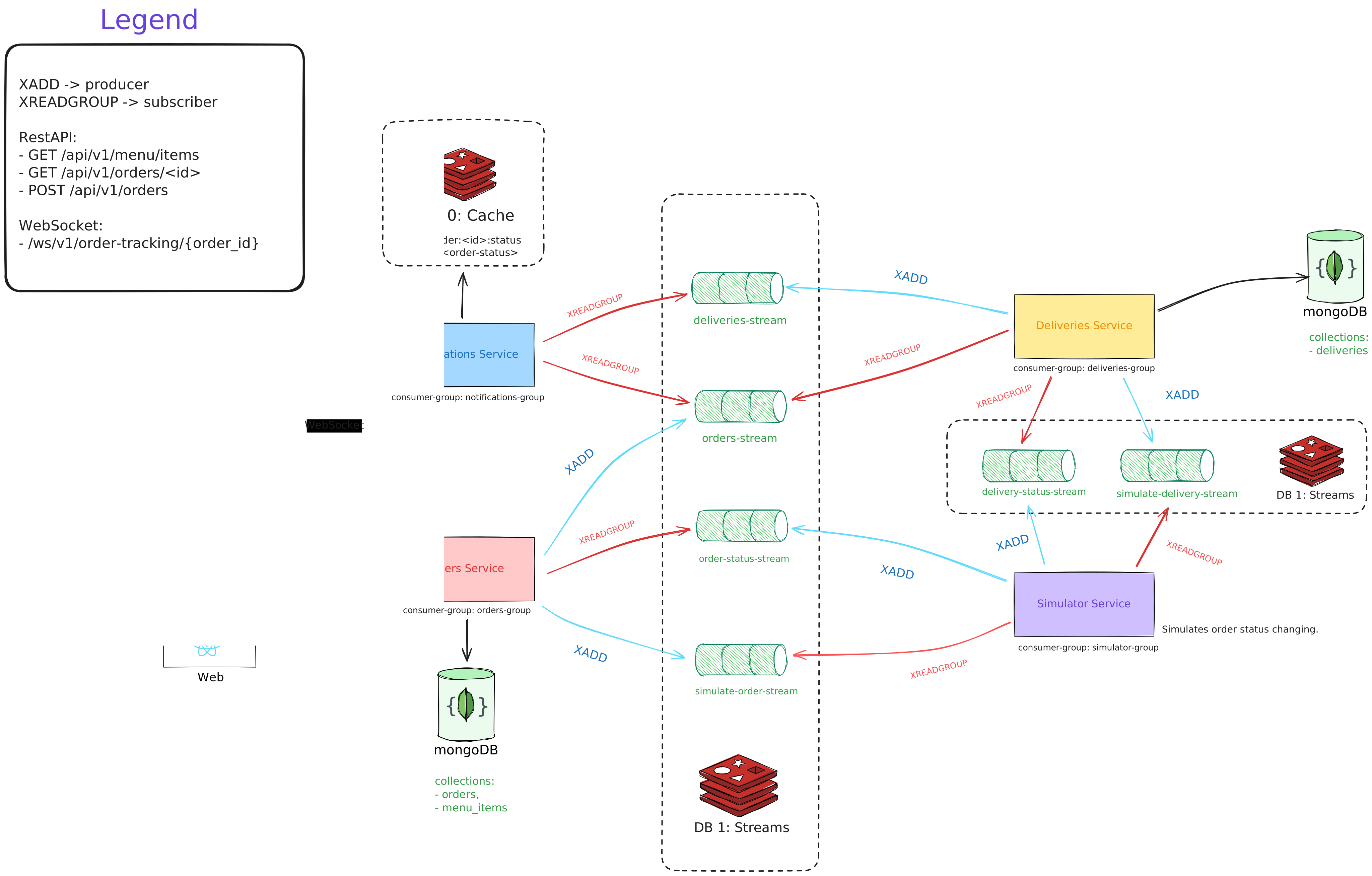
Communication Protocols
Layer |
Protocol |
Purpose |
|---|---|---|
Client ↔ API |
REST (HTTP/1.1) |
Order creation, menu queries |
Client ↔ Notifications |
WebSocket |
Real-time order tracking with ping/pong keepalive |
Service ↔ Service |
Redis Streams |
Async event-driven messaging with consumer groups |
Service ↔ MongoDB |
Wire Protocol |
ACID transactions over replica set |
No gRPC, no GraphQL, no SSE – intentionally simple protocol choices.
Redis Streams as an Event Bus
Redis Streams provide a persistent, ordered, append-only log with consumer group semantics – similar in concept to Kafka topics and consumer groups, but embedded in Redis.
Why Redis Streams Over Alternatives?
Feature |
Redis Streams |
Redis Pub/Sub |
RabbitMQ |
Kafka |
|---|---|---|---|---|
Message persistence |
✅ |
❌ |
✅ |
✅ |
Consumer groups |
✅ |
❌ |
✅ |
✅ |
Message acknowledgment |
✅ |
❌ |
✅ |
✅ |
Replay from offset |
✅ |
❌ |
❌ |
✅ |
Already in the stack |
✅ |
✅ |
❌ |
❌ |
Operational complexity |
Low |
Low |
Medium |
High |
Redis was already needed for caching. Streams add event bus capabilities without introducing another infrastructure component.
Consumer Group Mechanics
Each service registers a consumer group on the streams it cares about:
XREADGROUP GROUP orders-group consumer-1 COUNT 10 BLOCK 5000 STREAMS orders-stream >
GROUP orders-group– the consumer group name (one per service)consumer-1– individual consumer within the group (one per pod/replica)COUNT 10– batch size per readBLOCK 5000– block for 5 seconds if no new messages>– only read new (unacknowledged) messages
After successful processing, the message is acknowledged:
XACK orders-stream orders-group <message-id>
Retry & Dead-Letter Queue
Unacknowledged messages are automatically reclaimed after a timeout using XAUTOCLAIM. A retry counter tracks attempts per message:
Message fails processing
  → stays in pending entries list (PEL)
  → XAUTOCLAIM reclaims it after idle timeout
  → retry counter incremented (stored in Redis key)
  → if retries > max_retries → XADD to dead-letters stream
The dead-letter stream preserves the original message, stream name, group, and error information for manual inspection.
Message Envelope
Every event is wrapped in a standardized envelope:
{
  "event_type": "order.created",
  "correlation_id": "550e8400-e29b-41d4-a716-446655440000",
  "source": "orders-service",
  "timestamp": "2024-12-01T14:30:00Z",
  "payload": { "order_id": "...", "items": [...] }
}
The correlation_id follows an event across all services and appears in every log line, enabling end-to-end tracing through Loki without a dedicated tracing system.
Event Flow
Order Lifecycle
┌─────────┐     POST /orders      ┌────────────────┐
│ Browser  │ ──────────────────── │ Order Service   │
└─────────┘                       └───────┬────────┘
                                          │ order.created
                                          ▼
                                  ┌───────────────┐
                              ┌──│ orders-stream  │──┐
                              │  └───────────────┘   │
                              ▼                      ▼
                    ┌──────────────┐      ┌──────────────────┐
                    │ Delivery Svc │      │ Notifications Svc│
                    └──────┬───────┘      └────────┬─────────┘
                           │                       │
                           │ delivery.created      │ WebSocket push
                           ▼                       ▼
                   ┌─────────────────┐     ┌─────────┐
                   │deliveries-stream│────▶│ Browser  │
                   └─────────────────┘     └─────────┘
Simulation Pipeline
The simulator drives the order through realistic status transitions with configurable delays:
Order:    created → confirmed → preparing → out_for_delivery
Delivery: waiting → on_the_way → delivered
Each transition publishes a status update event, which the corresponding service picks up and persists.
Stream Topology
Stream |
Publisher |
Consumers |
|---|---|---|
|
Order Service |
Delivery, Notifications |
|
Delivery Service |
Notifications |
|
Simulator |
Order Service |
|
Simulator |
Delivery Service |
|
Order Service |
Simulator |
|
Delivery Service |
Simulator |
|
Any consumer (on failure) |
Manual inspection |
MongoDB & Transactions
MongoDB runs as a replica set (rs0), which is required for multi-document ACID transactions.
The order creation flow uses transactions to ensure atomicity:
Stock is decremented and the order is created in a single transaction
If stock is insufficient, the entire transaction rolls back
The event is published only after a successful commit
class MongoTransactionManager:
    async def transaction(self):
        async with await self.client.start_session() as session:
            async with session.start_transaction():
                yield session
This prevents overselling: two concurrent orders for the last item will have one succeed and one roll back.
Kubernetes Deployment
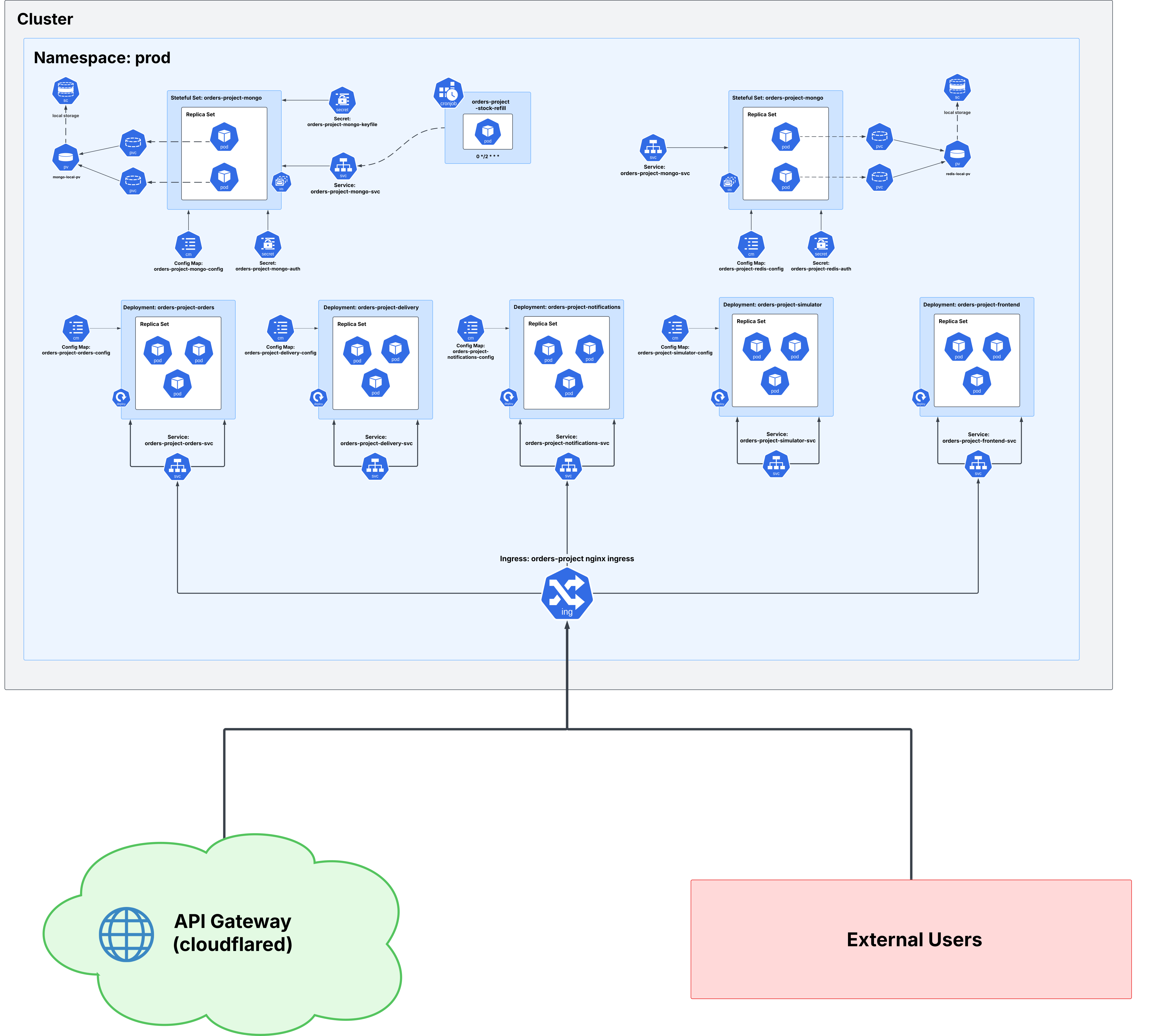
The production deployment uses an umbrella Helm chart with subcharts for each service and external dependencies:
Deployments for stateless application services
StatefulSets for MongoDB (replica set) and Redis (persistent storage)
Ingress NGINX with Cloudflared tunnel for public access
CronJob for periodic stock refill (keeps the demo running)
kube-prometheus-stack for monitoring (Prometheus + Grafana)
Loki + Promtail for centralized log aggregation
Three init Jobs run on first deployment:
init-rs-job – initializes MongoDB replica set
init-user-job – creates MongoDB admin user
init-dummy-db-job – loads demo menu data